Commercial facility pest defense addresses the unique biomechanics of Lowcountry commercial architecture across Charleston County. Food service venues along East Bay Street, retail operations near the Historic…
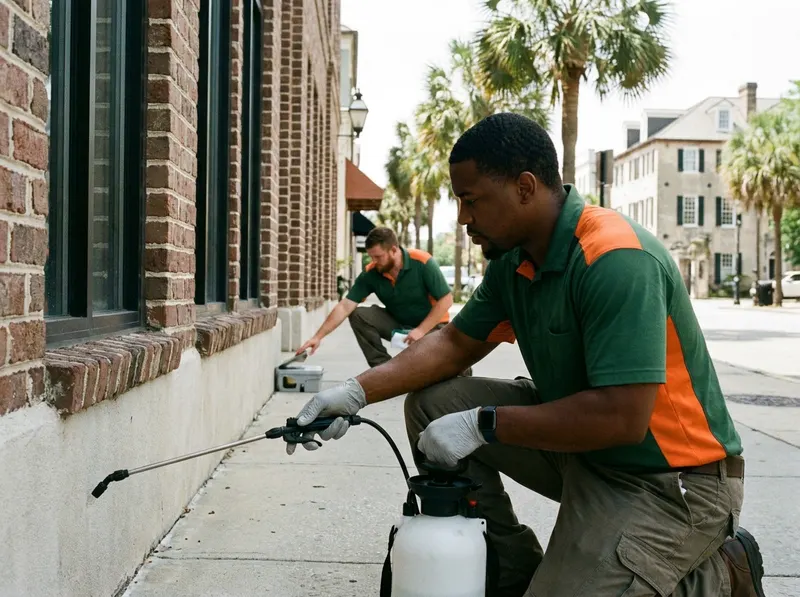
Commercial facility pest defense addresses the unique biomechanics of Lowcountry commercial architecture across Charleston County. Food service venues along East Bay Street, retail operations near the Historic Charleston City Market, and administrative offices across Daniel Island confront hyper-localized biological pressure. The subterranean moisture table, dense humidity, and aging municipal conduit networks create direct subterranean access for rodents and peri-domestic cockroaches. Standard residential sprays fail in commercial settings due to commercial kitchen grease breakdown, strict health department standards, and complex HVAC conduit networks. Facilities in Radcliffeborough and Harleston Village frequently feature historic brick mortar decay and raised foundation voids that require structural barrier seals rather than passive repellent applications.
Decision-fit considerations center on structural type, industry regulations, and operational exposure. A food service operator on King Street requires non-volatile, food-safe insect growth regulators and enzymatic drain treatments to satisfy DHEC inspection standards, whereas a logistics warehouse along Clements Ferry Road near Daniel Island requires heavy exterior rodent anchor stations spaced precisely every 30 to 50 linear feet along the foundation apron. The trade-off between exterior perimeter defense and internal remediation comes down to facility traffic: high-turnover hospitality spaces in South of Broad or near Joe Riley Waterfront Park require continuous exterior exclusion to prevent mechanical reintroduction, while sealed professional offices in West Ashley benefit from low-frequency quarterly barrier maintenance. Single-service treatments address active crises but leave facilities exposed to seasonal pest surges; scheduled barrier fortifications prevent cross-contamination across inventory.
Implementation follows a standardized three-step biological enforcement protocol. First, an on-site technician measures structural moisture levels, inspects utility entry points, and documents crawlspace masonry gaps common to Hampton Park Terrace and Wagener Terrace structures. Second, specialized physical exclusions are installed, including heavy-gauge copper mesh in weep holes, door sweeps beneath service bays, and micro-encapsulated non-repellent zones along the foundation perimeter. Third, interior wall voids and moisture-heavy collection zones receive targeted insect growth regulators that halt reproduction without contaminating food prep or commercial stock. Facilities requiring specialized subterranean termite barriers receive non-disruptive exterior termiticide trenching designed around historic root systems and coastal soil saturation profiles.
Every job gets a firm, written price after a free on-site visit.
Tell us about your commercial facility pest defense job in Charleston and we'll send a clear, written quote, usually the same day.
 Zorvexa Pest Solutions