Pest control services company provides pest control services in Charleston to neutralize structural infestations and prevent recurring bio-pressure from the surrounding coastal marshes. The humid Lowcountry climate accelerates subterranean termite feeding and palmetto bug migrations toward residential interiors throughout all four seasons.
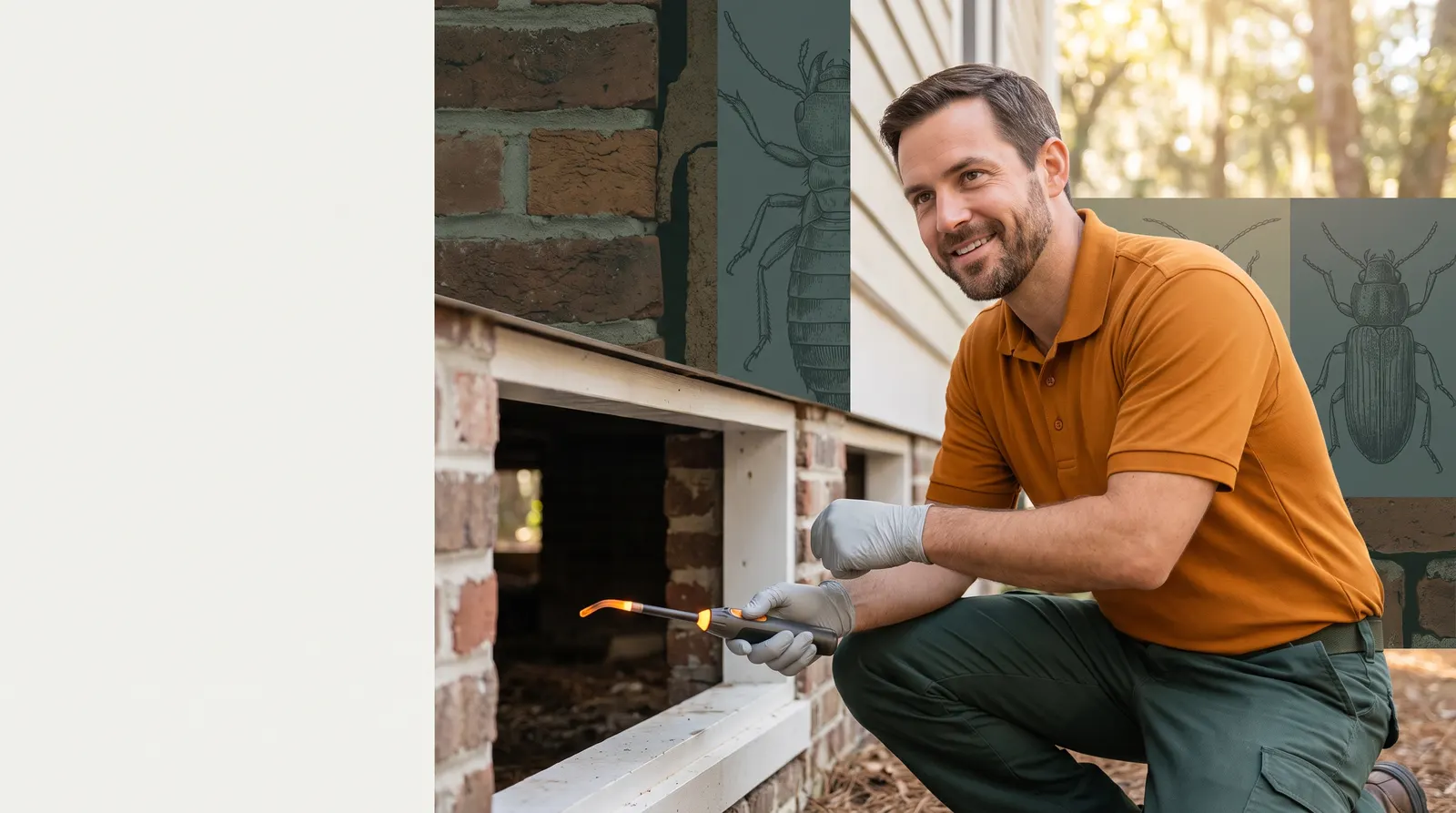
Pest control services company in Charleston is a specialized structural defense provider that applies targeted termiticides, crawlspace micro-encapsulations, and perimeter botanical barriers to eliminate indigenous coastal pests across historic and modern foundations.
Every service reflects the same meticulous attention to detail, whether it's a single job or a larger pest control services project across Charleston.
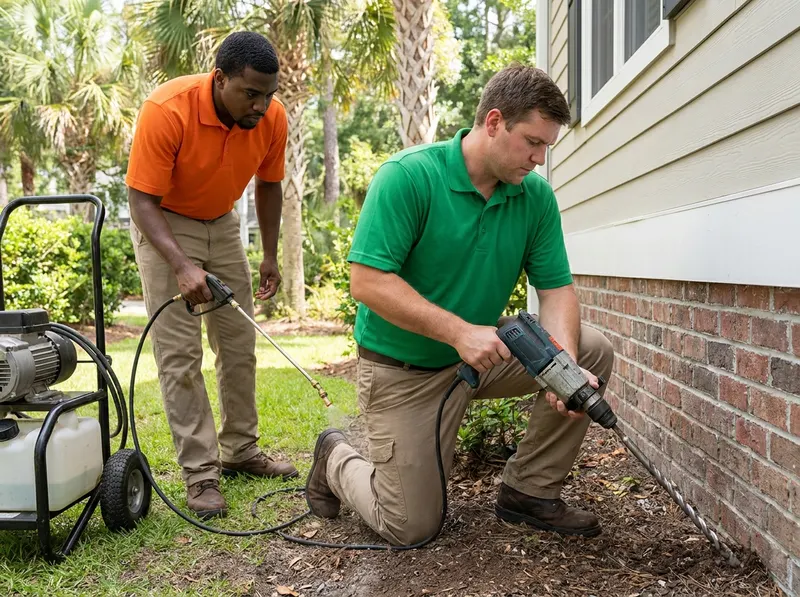
Comprehensive liquid trenching and non-repellent soil injection designed to halt Eastern subterranean and aggressive Formosan termite colonies. Official South Carolina Wood Infestation Reports (CL-100 inspections) provide licensed structural verification of active wood-destroying organisms, past damage, and joist moisture thresholds required for real estate closings. Technicians excavate continuous soil trenches measuring six inches wide by six inches deep along exterior foundation perimeters and interior foundation piers, applying non-repellent termiticide solutions at a calculated rate of four gallons per ten linear feet per foot of depth. This non-detectable formulation transfers horizontally throughout foraging subterranean colonies via social grooming and trophallaxis, inducing total colony collapse within 60 to 90 days. For structures built over slab foundations, specialized masonry drilling through expansion joints and plumbing collars delivers precision sub-slab hydraulic injections at twelve-inch intervals, neutralizing subterranean intrusion pathways without damaging finished architectural flooring. Clearances document structural framing moisture metrics and verify zero active infestations before lending institutions authorize transaction underwriting.
Get a quote →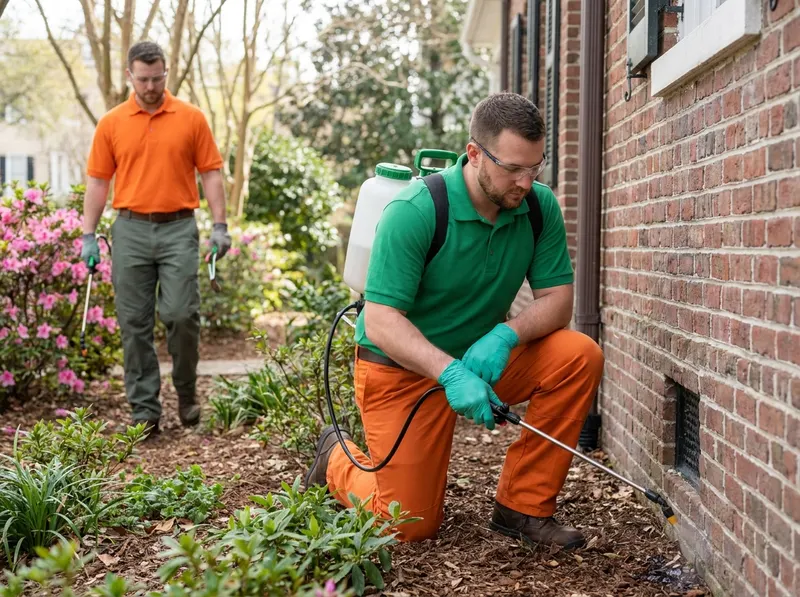
Systematic barrier defense applied to exterior masonry, weep holes, window thresholds, and crawlspace vents. Micro-encapsulated compounds target Smokybrown cockroaches, American cockroaches (palmetto bugs), and invasive Argentine ants before structural ingress occurs, minimizing interior pesticide placement. Applications utilize non-staining, UV-stabilized suspended micro-capsules that adhere directly to rough brickwork, stucco siding, and concrete foundation transitions, maintaining lethal efficacy against crawling arthropods through 90 days of intense Lowcountry heat and intermittent downpours. Technicians treat a vertical three-foot band of structural foundation exterior combined with a contiguous horizontal five-foot band of surrounding perimeter soil, pea gravel, or garden turf. All structural weep holes, electrical conduits, water spigots, and crawlspace access frames undergo targeted particulate dusting with water-resistant inorganic desiccants, forming an impassable boundary. This systematic approach eradicates perimeter foraging clusters outside the home envelope, rendering indoor interior chemical baseboard applications entirely obsolete.
Get a quote →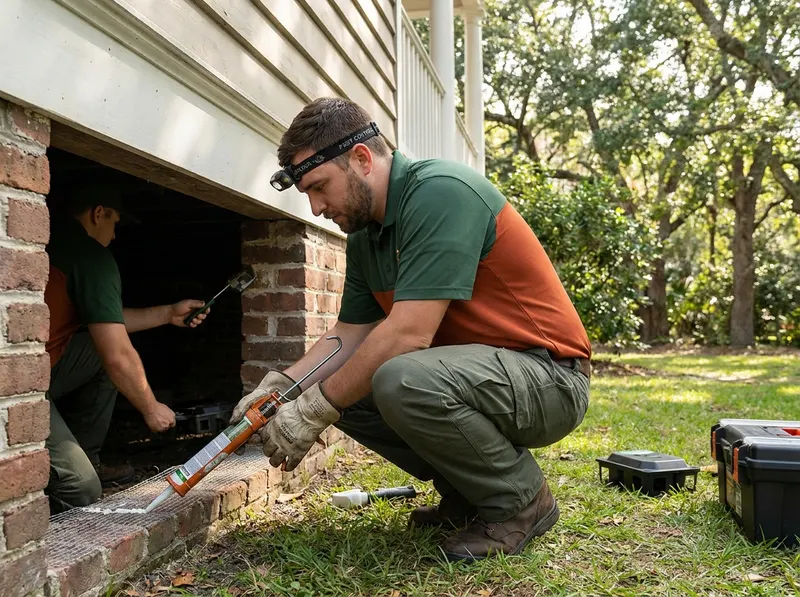
Mechanical entry point sealing combined with targeted interior monitoring for roof rats and Norway rats. Galvanized hardware cloth blocks access points along foundation vents, roofline soffits, and utility penetrations, followed by tamper-resistant bait stations that eliminate established populations inside raised substructures. The exclusion process targets quarter-inch gaps where utility pipes penetrate brick skirting, air conditioning refrigerant lines bridge through exterior siding, or historic roof rafter tails meet timber fascia boards. Field crews fasten quarter-inch gauge steel wire mesh, fire-rated expanding foam compounds, and custom metal flashing to structurally deny access to Rattus rattus and Rattus norvegicus. Inside the structural perimeter and crawlspace interior, heavy-duty tamper-proof monitoring stations secure first-generation and second-generation rodenticide blocks to concrete blocks, preventing accidental non-target access while intercepting roof rats traveling along subfloor sill plates, cross-joists, and air duct framing networks.
Get a quote →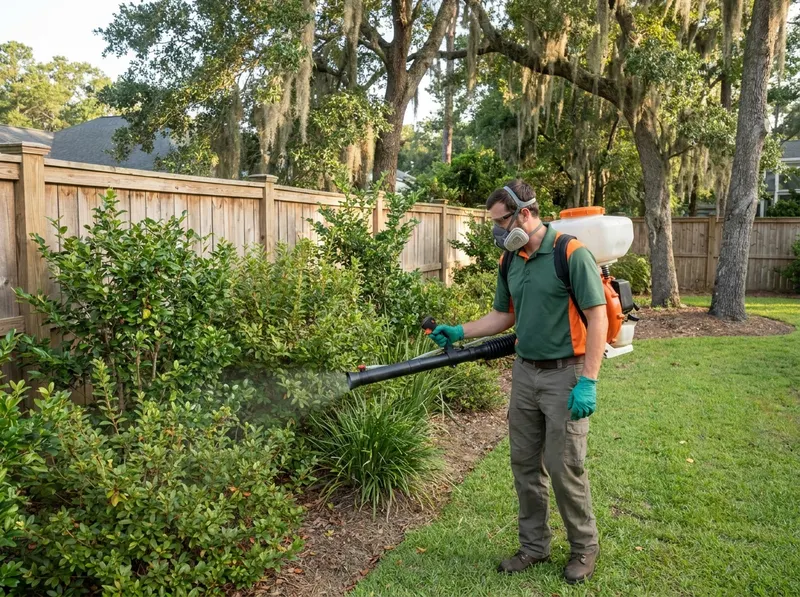
Precision foliage applications targeting shaded salt-marsh vegetation, shrub understories, and standing water margins. Micro-droplet applications disrupt the breeding cycles of floodwater mosquitoes and Asian tiger mosquitoes from late spring through early autumn across coastal outdoor living spaces. Ultra-low-volume backpack mist blowers atomize synthetic pyrethroids or plant-based essential oil solutions down to 50-micron droplets that cling securely to the undersides of broadleaf foliage, wax myrtles, ligustrum hedges, and palmetto bases where adult mosquitoes rest during daylight hours. Specialized biological larvicides utilizing Bacillus thuringiensis israelensis (BTI) dunks or micro-granules are dispersed directly into non-draining low spots, catch basins, decorative planter trays, and rainwater cisterns, killing aquatic mosquito larvae before pupation occurs. This dual adulticide and larvicide strategy neutralizes breeding cycles driven by high spring tides, tropical low-pressure systems, and afternoon thunderstorm deluges common to the Ashley and Cooper River basins.
Get a quote →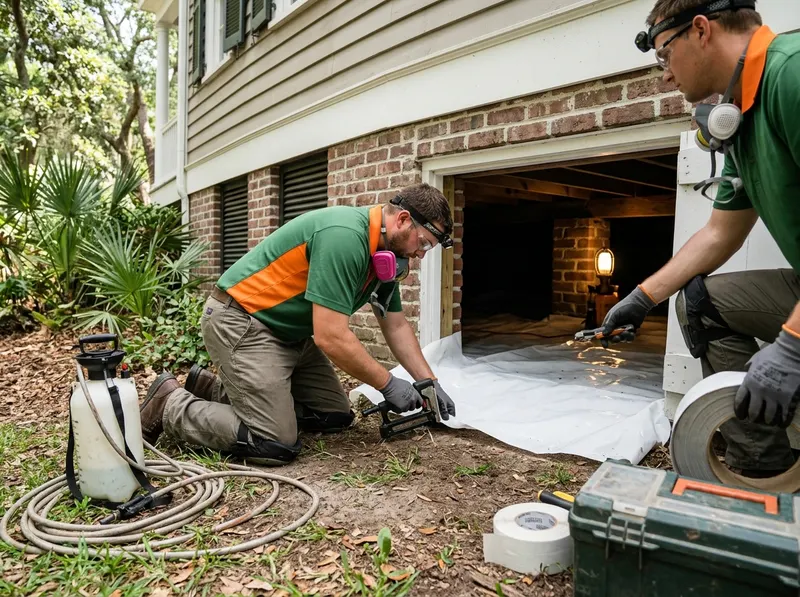
Application of specialized borate wood preservatives and antimicrobial treatments to subfloor framing exhibiting fungal degradation. Heavy-duty 10-mil to 20-mil vapor barriers and crawlspace conditioning regulate relative ambient humidity below the 20% wood moisture threshold required for wood-decay fungi proliferation. Field technicians inspect all subfloor dimensional timber, subfloor sheathing, and structural sill plates using dual-pin electronic moisture meters to calibrate exact moisture concentrations. When readings exceed 19%, timber is treated with water-soluble disodium octaborate tetrahydrate (DOT) solutions, providing permanent mineral barrier protection against white-rot fungi, brown cubical rot, and wood-boring powderpost beetles. Crawlspace soil surfaces undergo grading, debris extraction, and installation of cross-laminated, antimicrobial polyethylene ground vapor sheets tightly secured with masonry pins and taped at overlapping seams. Installing commercial-grade, energy-efficient crawlspace dehumidifiers continuously draws ambient humidity below 55%, halting biological wood rot and preserving foundational structural load capacities.
Get a quote →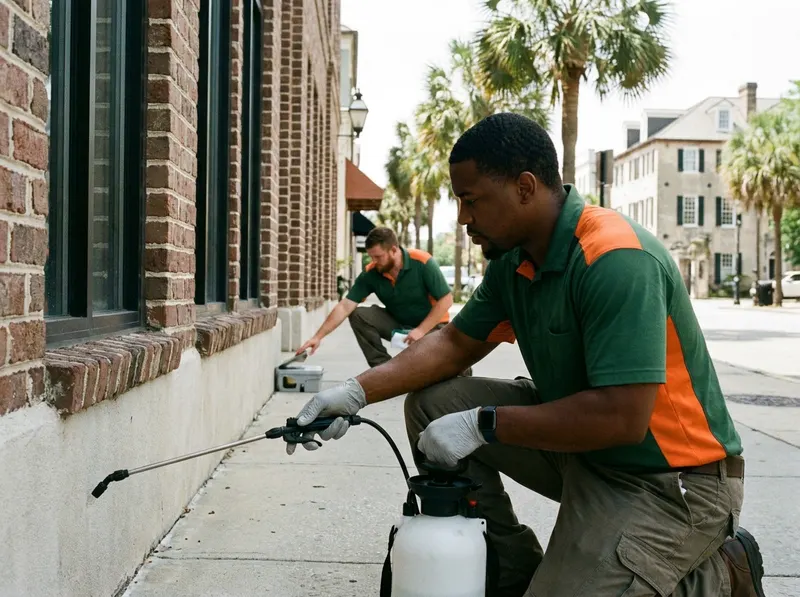
Regulatory-compliant structural IPM programs designed for downtown hospitality, historic retail centers, and educational facilities. Structured documentation, non-toxic bio-sanitation for commercial grease drainage systems, and discrete after-hours exclusion services maintain zero-tolerance regulatory compliance under Charleston County health codes. Specialized protocols address high-traffic restaurant kitchens along King Street and Market Street, applying non-pesticidal bioremediation foams enriched with live bacterial strains that digest organic fats, oils, and grease inside floor drains and plumbing traps. These drain treatments destroy the essential food sources and breeding habitats of drain flies and fruit flies (Drosophila melanogaster). Exterior service yards receive heavy-duty lockable rodent containment stations placed at strategic ten-foot to twenty-foot intervals along structural walls and waste enclosure zones. Detailed digital manifest logs and electronic trap-scanning reports provide immediate verifiable proof of compliance for South Carolina Department of Health and Environmental Control (DHEC) sanitation inspections.
Get a quote →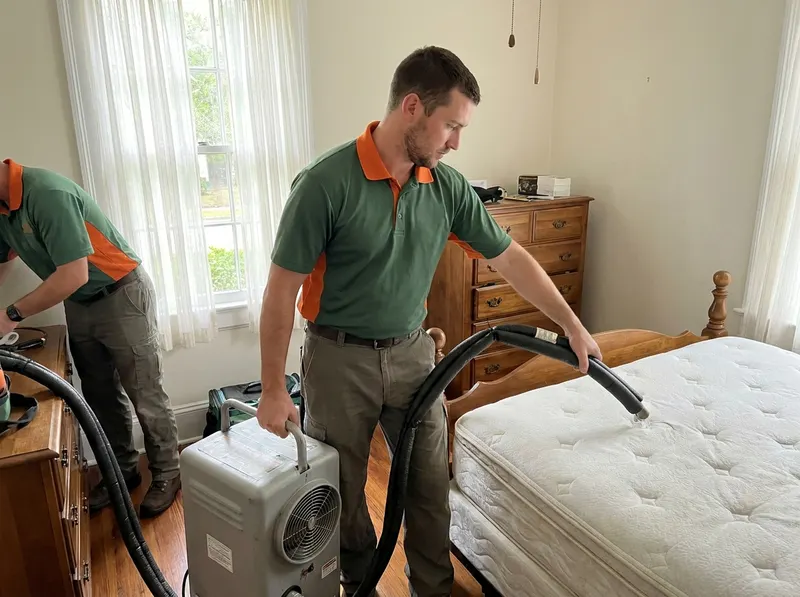
Targeted heat application raising structural target zones to lethal thermal ranges (122°F to 135°F), supplemented by micro-crystal desiccant dusts in wall cavities. The process eliminates egg batches, nymphs, and adult Cimex lectularius in a single targeted cycle without chemical saturation of textiles. High-output electric and indirect-fired industrial heaters circulate convective air currents throughout the treatment zone, utilizing heavy-duty axial fans to penetrate dense mattresses, upholstered headboards, baseboard crevices, and wall voids. Calibrated wireless thermistor sensors monitor ambient, surface, and core furniture temperatures in real time, guaranteeing that every crevice maintains a minimum core thermal reading of 122°F for at least 120 continuous minutes. This sustained heat coagulates the essential cellular proteins of the insects across all metamorphic stages, including heat-resistant egg casings. Follow-up treatments apply amorphous silica gel dust behind switch plates and electrical outlets, establishing an inert physical desiccant barrier that dehydrates any potential re-introduced bed bug specimens.
Get a quote →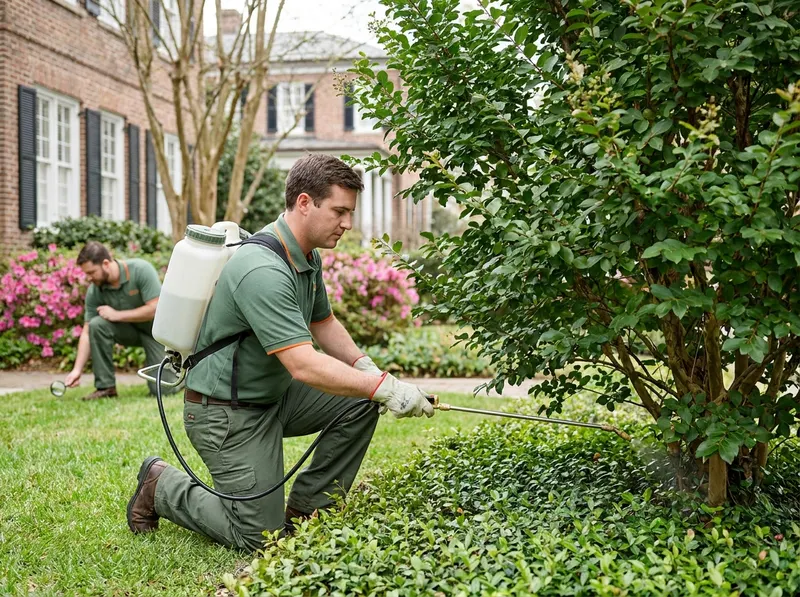
Systemic root injections and biological soil drenching targeting destructive turf and tree pests, including chinch bugs, fall armyworms, and scale insects infesting Lowcountry live oaks and St. Augustine turfgrass, preserving structural root strength and surrounding historic flora balance. Technicians administer systemic insecticides via high-pressure root drenching, allowing Quercus virginiana (live oaks) and Sabal palmettos to draw active defense compounds upward into their vascular systems, effectively terminating heavy infestations of armored scales, gall wasps, and tent caterpillars without non-target aerial drift. For lawns suffering from hot-weather southern chinch bug (Blissus insularis) damage or seasonal armyworm stripping, technicians apply granular and micro-suspension insect growth regulators that disrupt larval molting cycles while preserving beneficial soil microbes and earthworms. This service reinforces perimeter structural resistance by removing the dense arboreal and turf pest reservoirs that continually drive wood-boring and crawling pest populations toward adjacent home foundations.
Get a quote →You get a firm, itemized quote for your pest control services before any work begins, no surprises, no pressure.
Careful prep, tidy work, and a full cleanup when we are done. We treat your home and belongings like our own.
The same trusted, background-checked team from the first call to the final check.
Property structural engineering determines the specific pest remediation protocol across the Charleston peninsula and barrier islands. If you own a historic Charleston single house with raised brick piers and an open crawlspace in South of Broad, Harleston Village, or Radcliffeborough, choose specialized structural crawlspace encapsulation, borate wood mineral applications, and localized sub-slab liquid termiticide injections rather than high-pressure perimeter spraying. Open masonry foundations channel ground humidity that rapidly degrades standard diluted baseboard applications, whereas subterranean soil trenching forms a multi-year non-repellent protective band against Formosan termites that nest inside damp heart-pine sill plates.
If you own a contemporary concrete slab residence in Daniel Island, West Ashley, or James Island, select dual-ring non-repellent micro-encapsulated exterior perimeter defense coupled with quarterly weep-hole exclusion mesh and expansion joint injections. This establishes continuous barrier protection against Argentine ants and Smokybrown cockroaches without requiring interior living-area chemical exposure. The operational trade-off is mechanical access complexity versus application longevity: crawlspace soil excavations demand physical labor beneath historic joists to stop wood-destroying organisms at their subterranean soil origin, whereas exterior slab treatments require consistent quarterly barrier renewal to counter torrential coastal rain wash-off and high UV exposure along outer walls.
If a property exhibits timber moisture readings above 20%, chemical applications alone will fail; structural mechanical dehumidification combined with a reinforced 12-mil vapor retarder must precede chemical soil defense to halt subterranean termite foraging tunnels and active white-rot fungal propagation permanently.
Every project gets a firm, written price after a free on-site visit. Ranges below for orientation.
Tell us about your pest control services job and we'll send a clear, written quote, usually the same day. Or just call and talk to a real Charleston pro.
(854) 260-5785
Charleston's sea-level elevation, expansive marsh borders along the Ashley and Cooper rivers, and high-porosity sandy soils create an aggressive, continuous vector pathway for subterranean termites and humidity-dependent perimeter pests. Historic homes in neighborhoods like South of Broad, Harleston Village, Radcliffeborough, and Wagener Terrace feature damp raised crawlspaces with soft, aged heart-pine timbers that remain exceptionally vulnerable to Formosan termite colonies, wood-boring beetles, and fungal moisture rots whenever ambient humidity exceeds 70%. High tidal events along The Battery and White Point Garden push peri-domestic American cockroaches out of municipal brick sewer lines and subterranean cavities, driving thousands of insects upward into surrounding garden walls, foundation brickwork, and historic residential crawlspaces. Across suburban slab foundations in West Ashley, James Island, and Daniel Island, dense plantings of palmettos, pine straw bedding, and hardwood mulch sit directly against concrete edges, establishing ideal harborage conditions for Argentine ants and roof rats. Summer thunderstorm deluges in Hampton Park Terrace and around Hampton Park saturate surface soils, rapidly diluting conventional surface-sprayed chemicals and requiring advanced UV-resistant, micro-encapsulated formulations that bind chemically to wet masonry. Furthermore, proximity to protected aquatic ecosystems, including the Historic Charleston City Market waterways, College of Charleston campus green spaces, and the Fort Sumter National Monument Visitor Center marsh margins, demands precise, non-drift chemical delivery. Technicians apply targeted barrier applications along major residential corridors such as Broad Street, Meeting Street, and Savannah Highway, strictly calibrating termiticide concentrations and soil trench volumes to ensure complete structural defense without leaching active compounds into Joe Riley Waterfront Park or adjacent coastal tidal estuaries.
Free estimates for Charleston & the surrounding area.
 Zorvexa Pest Solutions